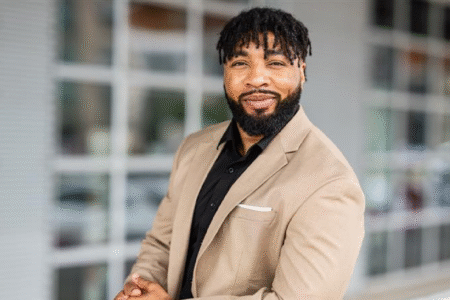
Green Success Stories puts Gabriel Williams, Senior Project Manager at Cordelio Power, and CEO/Founder of Wavy Properties and Williams Construction & Consulting Services, in the Green Spotlight. Gabriel discusses his move from project work in oil and gas to work in battery, solar, and wind, driven by a desire to be at the forefront of energy innovation and a more sustainable future. He likewise describes his work providing expert assistance with decision-making in the renewable energy sector, and applying sustainability to the housing and construction sectors. Gabriel points out that the shift to renewables is not a question of if, but when, and those who adapt early will be the ones leading the future of energy.
Tell us a bit about your sustainability journey.
I started my career in renewable energy back at the end of 2021. I have been working in the field on projects for most of my career, predominately in the oil and gas industry. My transition into renewables was fueled by a desire to be at the forefront of energy innovation and contribute to a more sustainable future.
Since making the shift, I’ve had the opportunity to work on large-scale solar and battery energy storage projects, helping to bridge the gap between traditional energy sectors and emerging clean technologies. My experience in oil and gas provided me with a strong foundation in project management, engineering, and execution—skills that have been invaluable as I navigate the complexities of renewable infrastructure development.
Currently, I lead the Battery Energy Storage Systems (BESS) department for pre-construction at Cordelio Power, where I work closely with executives and industry leaders to drive forward sustainable energy solutions. My goal is to play a key role in shaping the future of renewables, optimizing clean energy deployment, and contributing to a greener, more resilient power grid.
Sustainability, to me, is more than just a career—it’s about creating long-term impact, developing innovative solutions, and ensuring that the next generation inherits a cleaner, more efficient energy landscape.
Tell us a bit about the product or solution you offer.
My primary product is providing expert assistance with decision-making in the renewable energy sector. With years of experience in large-scale solar and battery energy storage projects, I help businesses, developers, and investors navigate complex project considerations, optimize financial and technical strategies, and make informed choices that drive the success of their renewable energy initiatives.
Beyond consulting, I am also working on developing next-generation accommodations that integrate renewable energy solutions. My vision is to create sustainable living spaces that prioritize energy efficiency, resilience, and innovation—whether through solar power, battery storage, or smart energy management systems. By merging real estate with renewable energy, I aim to provide housing solutions that not only reduce environmental impact but also offer long-term value and reliability to residents.
Ultimately, my goal is to bridge the gap between clean energy and real estate, making sustainable living more accessible while helping companies and individuals transition toward a greener future.
Share a green success story with us – how have you helped customers or other businesses in the fight against climate change?
One of the most effective ways I contribute to the fight against climate change is through education and knowledge sharing. I actively teach people in my network and on social media about emerging renewable energy technologies, helping individuals and businesses understand how they can implement sustainable solutions. By breaking down complex topics like battery storage, solar efficiency, and wind energy, I empower others to make informed decisions that drive real change.
As I continue growing in the industry, my focus is on optimizing renewable energy systems, particularly in battery, solar, and wind technology. My expertise helps companies improve efficiency in their energy projects, especially in reducing costs per watt ($/Wdc), which is a crucial metric in making clean energy solutions more viable and scalable.
Beyond consulting, I am working toward obtaining my real estate license to specialize in midterm rental properties that incorporate solar, battery storage, and EV technology. The goal is to develop sustainable living solutions that lower energy costs for residents while providing value-added opportunities for partners who host these units. By integrating renewable energy into real estate, we can create communities that are not only more sustainable but also more cost-effective and resilient in the long run.
Through a combination of education, technical expertise, and real estate innovation, I am committed to driving meaningful change in both the energy and housing sectors, making sustainability more accessible and practical for businesses and individuals alike.
What would you do with $1 billion dollars?
If I had $1 billion, I would approach it with the same discipline and strategic planning that I apply to all my income—allocating it carefully to maximize impact and long-term sustainability.
My primary focus would be on scaling Wavy Properties to acquire land and develop high-efficiency condominium communities designed for sustainable living. These communities would integrate solar, battery storage, and EV infrastructure to create fully self-sustaining homes, drastically reducing reliance on traditional energy sources. Excess power generated would be redirected back into the grid, further contributing to clean energy adoption. By leveraging cutting-edge technology and innovative design, these developments would not only lower costs for residents but also serve as a model for the future of housing.
In parallel, I would expand Williams Construction and Consulting Services, building a vertically integrated firm that provides expert support from pre-construction through final execution on renewable and residential projects. This would allow for streamlined project delivery and greater impact across both the public and private sectors.
Beyond real estate and construction, I would allocate funds to develop education and consulting initiatives in the renewable energy space—ensuring that businesses and individuals have the knowledge and tools to transition toward sustainability efficiently.
Ultimately, the goal would be to create a lasting impact—providing affordable, energy-independent housing while driving the shift toward a cleaner, more resilient energy future.
What do you envision your industry looking like in ten years?
I have high hopes for the renewable energy industry over the next decade, and I anticipate major advancements that will reshape how we generate, store, and distribute power. One of the most exciting breakthroughs I foresee is in material engineering, particularly with perovskite solar modules. These next-generation materials have the potential to significantly increase solar efficiency while reducing production costs, making clean energy even more accessible and widespread.
Beyond material science, I expect substantial cost reductions across the entire renewable energy supply chain, from solar and wind project development to battery storage deployment. As these technologies become more affordable, we will see higher adoption rates across residential, commercial, and industrial sectors.
Another key transformation will be the expansion of the power grid to transport electricity from high-generation regions—such as areas rich in solar or wind resources—to demand centers. Investments in high-voltage transmission lines and grid modernization will play a crucial role in balancing intermittent energy sources and ensuring a more resilient, efficient power infrastructure.
In addition, energy storage will take center stage, with large-scale battery storage and hybrid solutions becoming critical for grid stability and decentralized energy management. I also foresee significant growth in self-sustaining communities, where homes and businesses generate, store, and manage their own energy independently.
Overall, the next ten years will be transformational, with cleaner, smarter, and more efficient energy systems paving the way for a more sustainable and decentralized power future.
What would you like readers to take away from this article?
The key takeaway from this article is that renewable energy and energy storage are the future. As technology advances, these solutions will drive lower energy costs, increase grid reliability, and accelerate the transition toward a cleaner, more sustainable world.
Investments in solar, wind, and battery storage are not just about reducing emissions—they are about energy independence, economic growth, and long-term affordability. By continuing to innovate and expand these projects, we can help the U.S. achieve its carbon neutrality goals by 2050 while creating a more resilient and efficient power infrastructure.
The shift to renewables is not a question of if, but when, and those who adapt early will be the ones leading the future of energy.
How should readers get in touch with you and/or your organization?
Through LinkedIn: https://www.linkedin.com/in/gabriel-williams-7a0071135/
Kudos
Many thanks to Gabriel Williams and Cordelio Power, Wavy Properties, and Williams Construction & Consulting Services. Green Success Stories is happy to support and highlight your efforts! We invite you the reader to do the same.
About Green Success Stories
Green Success Stories is a media platform that highlights leaders in sustainability and climate tech.
We offer professional writing (articles, blogposts, case studies, and more) combined with social media promotion. You get great content + exponential publicity. As a starting offer, we’d like to feature you and your organization in a FREE PROFILE ARTICLE. There’s no obligation, but we’d appreciate you considering our services. Let us know if you’re interested and we’ll share more information.
Support Green Success Stories
Like what we’re doing? Please pitch in and help us highlight leaders in the fight against global warming.