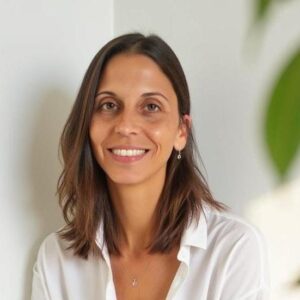
Green Success Stories puts Hila Kaplan, CEO of Israel’s Ramat Hanegev Regional Council, in the Green Spotlight. Hila describes her education in marine sciences and environmental studies as exposing her to the importance of environmental protection, which helped her in recognizing the serious environmental challenges and opportunities in working with the largest regional council in Israel. There her responsibilities and tasks grew to include developing innovative solutions for waste management, water conservation, soil contamination mitigation, air quality management, and nature conservation. Hila stresses the importance of finding holistic solutions that address regulatory needs while promoting innovation, partnership, and home-grown green solutions.
Tell us a bit about your sustainability journey.
I began my professional journey in the environmental field while pursuing a Bachelor’s degree in Marine Sciences and Environmental Studies, where I was first exposed to the critical importance of environmental protection. Several years later, I moved to the Ramat HaNegev Regional Council – the largest regional council in Israel, covering 4.2 million dunams- which presents both significant environmental challenges and unique opportunities.
I first joined the council as Coordinator of the Environmental Unit. After several years, I became responsible for the municipality’s waste management sector, overseeing the collection and removal of waste from all residents and visitors across Ramat HaNegev, including IDF and Israel Prison Service bases. This role also involved close collaboration with the Ministry of Defense to develop effective solutions for reducing landfill disposal and promoting recycling.
In subsequent years, I established the council’s Environmental Division, which included managing the Environmental Unit. This encompassed issuing environmental conditions for business licensing, environmental planning- particularly waste management- initiatives for water conservation, soil contamination mitigation, air quality management, and nature conservation. After several years as head of the division, I was asked by the head of the council to serve as the municipality’s CEO, a role I fulfilled for five years.
Tell us a bit about the product or solution you offer.
As the CEO of a local authority such as the Ramat HaNegev Regional Council- which confronts the daily dilemma of balancing regional development with the preservation of natural and environmental values – I saw a significant opportunity to advance the region technologically while addressing key municipal challenges. On one hand, the council seeks to grow and develop in order to strengthen settlement in Israel’s peripheral border areas. On the other hand, it is clear that settlement, much of which is based on promoting regional agriculture, carries substantial environmental implications.
Unfortunately, these remote border communities, which rely heavily on agriculture, lack viable economic and environmental solutions for managing their waste. This is precisely where we, as a local authority, stepped in. We recognized that the area we sought to serve presents considerable challenges, yet also tremendous opportunities for environmental and energy innovation
Share a green success story with us – how have you helped customers or other businesses in the fight against climate change?
We approached the “Pithat Nitzana” area – this remote, border- adjacent region from a holistic perspective. We advanced circular economy initiatives that enabled an innovative way of understanding and utilizing the local landscape. One of our key projects with the help of JNF Netherlands and the Ministry of Energy was the establishment of a gasification facility, a thermal system that converts agricultural plant waste into energy. We located the facility within the regional wastewater treatment site, creating a closed-loop system: the energy produced by the gasification process powers the wastewater treatment plant, and the treated water is then delivered to the surrounding agricultural fields for tomato cultivation.
In parallel, agricultural farms in the area installed solar panels that generate additional energy. As noted previously, the region faces numerous challenges, one of the most significant being electricity supply. The distribution lines that carry power to the region are among the longest in Israel, resulting in reduced supply reliability. To address this, we promoted the deployment of neighborhood-scale energy storage systems connected to the solar panels installed in the local communities, ensuring a more stable and resilient electricity supply for residents.
Today, in full collaboration with the national system operator (Noga) and the Israel Electric Corporation, we are working to establish a similar large-scale project- standalone energy storage systems disconnected from substations – designed to serve entire communities. These systems will significantly improve electricity reliability while generating clean, renewable energy.
What would you like readers to take away from this article?
I wanted readers to recognize that innovative and entrepreneurial thinking is highly relevant within local government as well. Many startups and technology developers approach me for support in navigating the barriers and bureaucratic processes required to approve certain technologies. Often, these entrepreneurs are not familiar with the regulatory landscape needed to advance their innovations within the public sector. As a result, they become discouraged and turn to markets outside of Israel—preventing talented innovators and high-quality technologies from remaining and developing within the country. It is essential to view environmental challenges through a holistic lens rather than addressing them only with isolated, point-specific solutions. We chose to advance pilot projects in order to help drive regulatory change that had previously blocked viable solutions to complex environmental issues. It is important for me to emphasize that creating meaningful impact requires bringing partners on board
How should readers get in touch with you and/or your organization?
You can contact me through my LinkedIn profile, and the council can be reached via its official website
https://www.linkedin.com/in/hila-kaplan-b6368b85/
Kudos
Many thanks to Hila Kaplan and to the Ramat Hanegev Regional Council. Green Success Stories is happy to support and highlight your efforts! We invite you the reader to do the same.
About Green Success Stories
Green Success Stories is a media platform that highlights leaders in sustainability and climate tech.
We offer professional writing (articles, blogposts, case studies, and more) combined with social media promotion. You get great content + exponential publicity. As a starting offer, we’d like to feature you and your organization in a FREE PROFILE ARTICLE. There’s no obligation, but we’d appreciate you considering our services. Let us know if you’re interested and we’ll share more information.
Support Green Success Stories
Like what we’re doing? Please pitch in and help us highlight leaders in the fight against global warming.