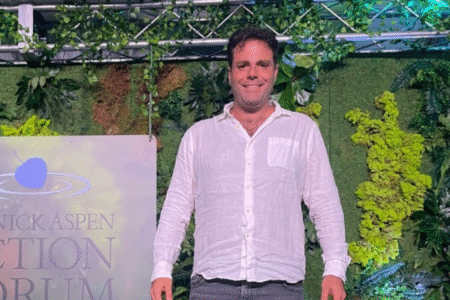
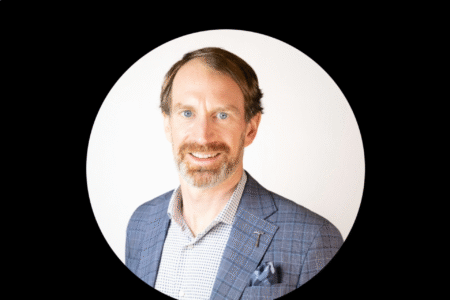
Green Success Stories puts Shawn Rome-Ledig, CEO and Founder of Delta AgroFiber Solutions and Good Delta Biochar, in the Green Spotlight. Shawn expresses his belief that the future of agriculture and construction must be regenerative, circular, and rooted in local impact. He describes the role of his company in transforming industrial hemp and agricultural waste into high-value, sustainable products, like biochar, hempcrete, and bioplastics, while supporting local farmers with seed-to-buyback programs, technical assistance, and access to carbon markets. With his and his company’s efforts, he hopes to show the world that industrial hemp can be a powerful tool in the fight against climate change while creating jobs, revitalizing rural communities, and building climate-resilient infrastructure, one acre and one partnership at a time.

Tell us a bit about your sustainability journey.
Our sustainability journey began with a simple but powerful belief: that the future of agriculture and construction must be regenerative, circular, and rooted in local impact. At Delta AgroFiber Solutions and Good Delta Biochar, we set out to prove that industrial hemp and biomass waste could be the foundation for a more sustainable south, economically, environmentally, and socially.
We started by pioneering the growth of non-consumable industrial hemp in Louisiana under USDA and LDAF-compliant protocols. From seed to stalk, our operations avoid herbicides and pesticides, rely on organic inputs, and use every part of the plant. What began as 5 acres has expanded into 300 and creating a regional movement, connecting farmers, universities, engineers, and buyers in a value chain that rewards sustainability at every step.
Now, we’re building biochar and processing facilities to turn agricultural waste into carbon-sequestering, soil-enriching products and we’re working with local oil and gas companies, bioplastics manufacturers, and the USDA Climate-Smart Commodities program to bring this vision to life on a national scale.
Our goal has always been clear…to create a system where what we grow, build, and return to the earth leaves things better than we found them.
Tell us a bit about the product or solution you offer.
I’m Shawn Ledig, Founder of Delta AgroFiber Solutions and Good Delta Biochar. We’re building a scalable, regional ecosystem for regenerative agriculture and carbon-smart construction, starting right here in the Gulf South. Our core solution lies in transforming industrial hemp and agricultural waste into high-value, sustainable products, like biochar, hempcrete, and bioplastics, while supporting local farmers with seed-to-buyback programs, technical assistance, and access to carbon markets.
We’re also launching one of the first biochar and hemp processing facilities in Louisiana, integrating logistics, compliance, and engineering under one roof. Our approach bridges the gap between raw biomass and real-world applications in EV batteries, construction, and soil remediation. Proving that clean growth is not only possible but profitable in underserved communities.
Share a green success story with us – how have you helped customers or other businesses in the fight against climate change?
One of our most impactful success stories began with a small pilot program in South Louisiana, where we helped a local farmer transition from underperforming fields into yielding non consumable industrial hemp without synthetic fertilizers or pesticides. These crops were later processed for fiber and hurd, which we used as material for one of our hempcrete show homes.
By the end of last season, we had baled and processed tons of industrial hemp biomass that would have been wasted and transformed it into valuable materials for regenerative agriculture and carbon-negative building solutions. This initiative not only helped reduce greenhouse gas emissions and improve soil health but also created new income streams for farmers through fiber buybacks and sustainable product partnerships.
Through this model, we’ve shown that industrial hemp can be a powerful tool in the fight against climate change while creating jobs, revitalizing rural communities, and building climate-resilient infrastructure, one acre and one partnership at a time.
What would you do with $1 billion dollars?
With $1 billion, we would build a nationwide regenerative supply chain using industrial hemp…from seed to structure. We would expand grower networks across underserved rural regions, build scalable processing hubs for fiber, hurd, and grain, and establish next-generation manufacturing facilities to create carbon-negative products like hempcrete panels, insulation, and bioplastics.
We’d invest in biochar production at every stage to sequester carbon and restore degraded soils, while offering farmers buyback programs, carbon credit access, and long-term sustainability contracts.
Most importantly, we’d reinvest profits into education, research, and equity—creating workforce training programs, tribal partnerships, and economic opportunities for veterans and historically marginalized communities.
Our goal: a resilient, green economy rooted in agriculture, innovation, and community ownership.
What do you envision your industry looking like in ten years?
In 10 years, I envision the industrial hemp industry becoming one of the cornerstones of the green economy, fully integrated into construction, energy, agriculture, and manufacturing. Hemp will no longer be a niche crop, but a mainstream solution for climate-smart materials, biochar carbon sequestration, bioplastics, and rural revitalization.
We’ll see farmers growing hemp not just for profit, but as stewards of soil health and carbon reduction. Biochar kilns will be as common as grain silos in farming communities, and hempcrete homes will be recognized for their durability, affordability, and zero-carbon footprint.
Supply chains will be regionalized, farmer-led, and transparent creating local jobs and keeping value in the communities that need it most. And because of data-driven verification and policy support, carbon credits, green bonds, and public-private funding will drive continuous investment into this regenerative model.
This isn’t just an industry, it’s a movement, and in 10 years, we’ll be leading it from the ground up.
What would you like readers to take away from this article?
I want readers to understand that sustainability is not just a trend. It is a real path forward that blends innovation with tradition, business with responsibility, and agriculture with climate action. Hemp is not just a crop. It is a catalyst. When grown and processed responsibly, it has the power to heal our soils, reduce emissions, and rebuild rural economies. I hope people walk away inspired to think differently about what is possible when communities, science, and policy come together. Whether you are a farmer, investor, policymaker, or consumer, there is a role for everyone in this movement. We can fight climate change, create real economic opportunity, and build a future that is focused on regeneration rather than extraction.
This is about impact and legacy, not just innovation and it starts with planting the right seed for our region.
How should readers get in touch with you and/or your organization?
We’d love to connect with anyone who’s passionate about sustainability, regenerative agriculture, or building a better future with industrial hemp. You can reach out to us directly through our website at http://www.deltaagrofiber.com or email us at [email protected].
Follow our journey and field updates on Instagram at @deltaagrofiber, or connect with our team on LinkedIn at Delta AgroFiber Solutions or Shawn Ledig.
Whether you’re a grower, investor, researcher, or simply curious, we welcome the opportunity to collaborate and grow together.
Kudos
Many thanks to Shawn Ledig and to Delta Agrofiber Solutions and Good Delta Biochar.
Green Success Stories is happy to support and highlight your efforts! We invite you the reader to do the same.
About Green Success Stories
Green Success Stories is a media platform that highlights leaders in sustainability and climate tech.
We offer professional writing (articles, blogposts, case studies, and more) combined with social media promotion. You get great content + exponential publicity. As a starting offer, we’d like to feature you and your organization in a FREE PROFILE ARTICLE. There’s no obligation, but we’d appreciate you considering our services. Let us know if you’re interested and we’ll share more information.
Support Green Success Stories
Like what we’re doing? Please pitch in and help us highlight leaders in the fight against global warming.